Insights · 6 min read
Western Table Manners: A Complete Etiquette Reference
Most table-manners anxiety comes from a handful of small, learnable signals — not a mysterious set of rules only some people were taught. Here's the reference guide we wish more people had before their first formal Western meal.
Why the Details Matter More at the Table Than Anywhere Else
A business dinner is one of the few settings where competence and composure are being judged simultaneously, in real time, over an extended period — there's no equivalent stretch in a meeting room. Table manners aren't about performing wealth or breeding; they're a shared signalling system that lets everyone at the table relax, because no one is silently working out whether you know what you're doing.
The good news is that the actual rule set is small and mechanical. Once you know it, it stops requiring conscious thought — which is the entire point.
The Core Mechanics
Bread
Break bread with your hands into small pieces rather than biting directly from the whole roll or cutting it with a knife. Butter one piece at a time, not the whole roll at once.
Cutlery Signals
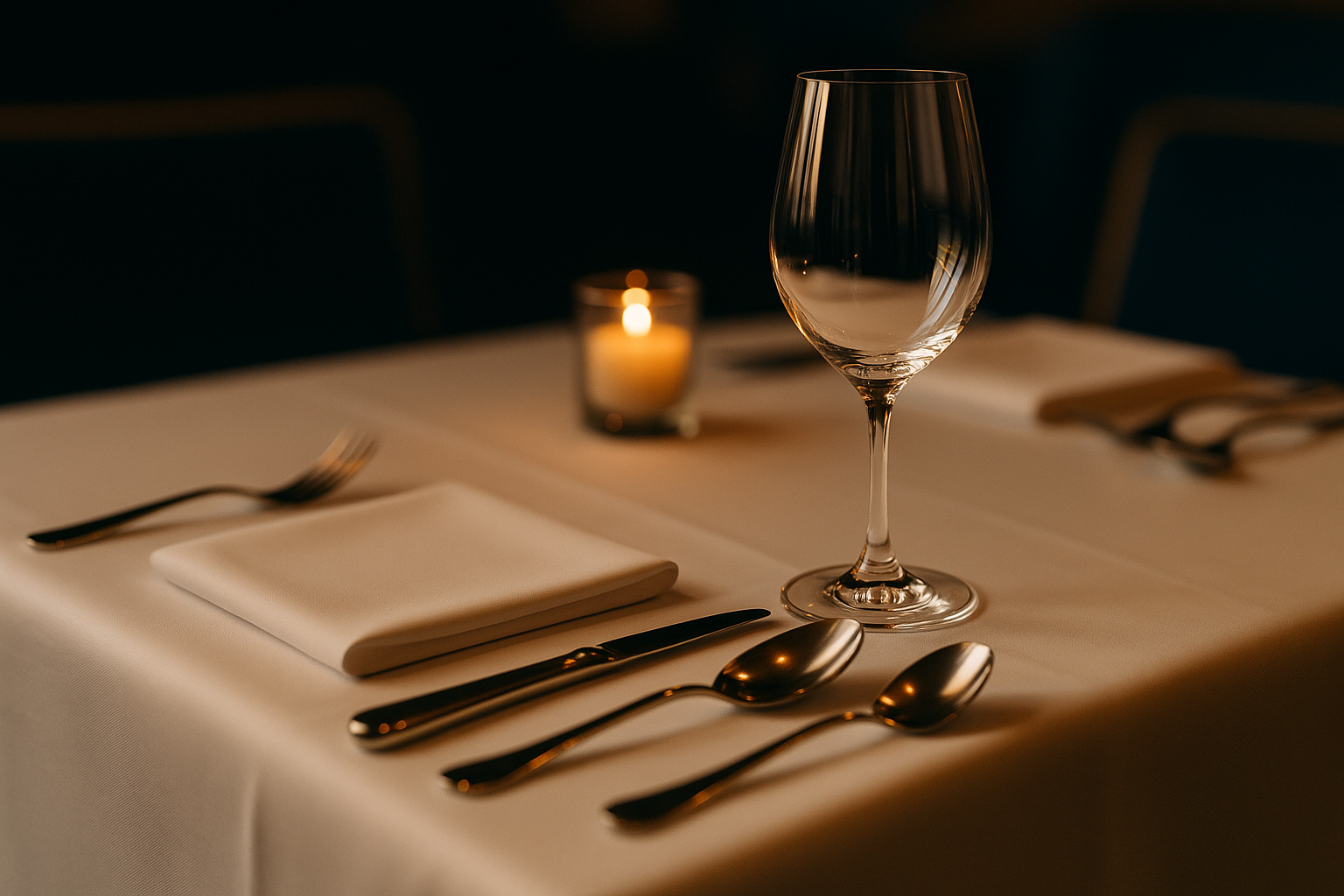
Cutlery position communicates without words: crossed on the plate means "still eating, please don't clear"; parallel, side by side, means "finished." Work from the outside in when multiple courses are set.
Napkin Etiquette
Unfold it onto your lap as soon as you sit, not before the host does. If you leave the table temporarily, place it loosely on your chair, not the table; at the end of the meal, leave it gently gathered beside your plate.
Soup
Spoon away from you, sip from the side of the spoon rather than the tip, and tilt the bowl away from you (not toward you) to get the last spoonfuls.
Quick Answers to Common Questions
Chopsticks at a mixed Western-Chinese table: personal chopsticks for eating, communal serving chopsticks (公筷) for shared dishes — never use one pair for both.
Ordering wine: it's fine to ask your host or the sommelier for a recommendation rather than guessing — confidence in asking reads better than confidence in guessing wrong.
Swirling red wine: acceptable and even expected for full-bodied reds, to release aroma — but a small, controlled swirl, not a wide one.
Toasting: make eye contact as glasses meet, keep the gesture brief, and never reach across the table to clink with someone out of reach.
Garnishes: most cocktail garnishes (citrus twists, olives, cherries) are edible and intended to be eaten or used to flavour the drink — check with the venue if genuinely unsure.
These mechanics are the foundation — the higher-value skill is applying them fluently in an actual business context, where the meal is really a relationship-building exercise. For that context specifically, see our guide to business dining etiquette in Hong Kong, or explore dining etiquette as part of our IITTI-authorised Soft Skills Certification, which includes a dedicated dining etiquette module.
Ready to make a lasting impression?
Let's design a program around your goals — for yourself, your team or your organisation.
Start the conversation